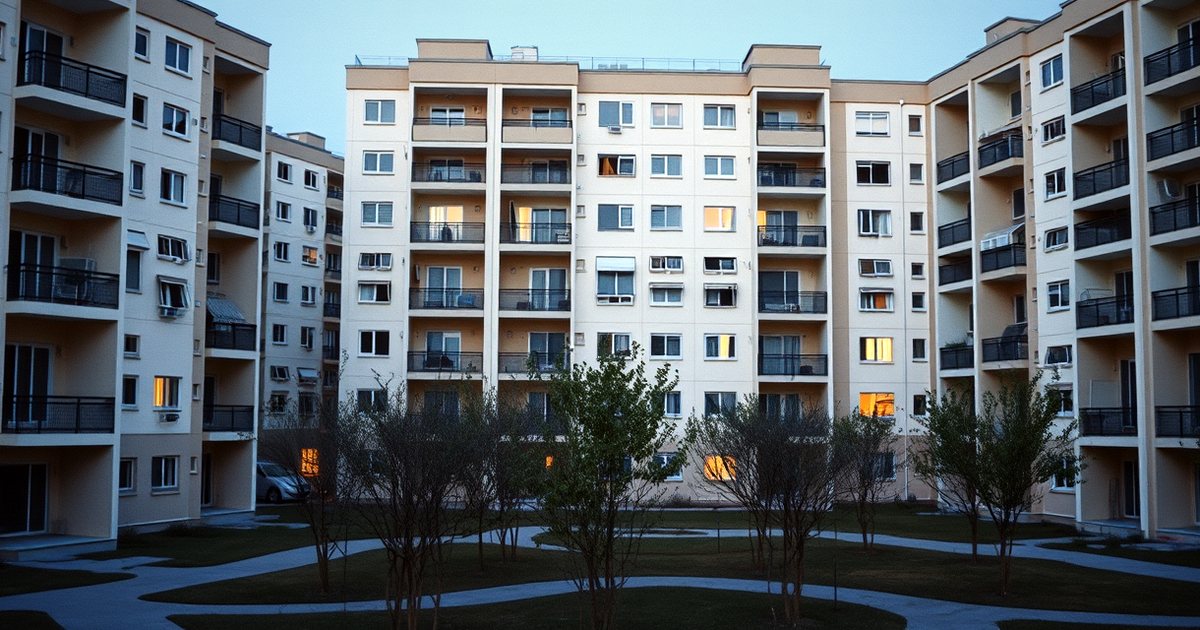
Housing complexes in Gebze and Çayırova that have gone a long time after handover without an occupancy permit (iskan) have recently been in the local press. The rights described below are not limited to these two districts. In İzmit, Gebze, Çayırova, Darıca, Dilovası, Körfez, Derince, Kartepe, Başiskele, Gölcük, Karamürsel and Kandıra, that is, in every district of Kocaeli; in Tuzla, Pendik, Kartal, Maltepe and Kadıköy in Istanbul; in short, everywhere in Turkey, the same rules apply to housing complexes without an occupancy permit. They apply in the same way to foreign nationals who own or rent a flat in Turkey.
A delay in the occupancy permit does not mean that you will lose your flat. It does, however, cause problems in many areas, from the title deed and utility subscriptions to a sale and the service charges. Some lawsuits and applications also have short deadlines.
Your rights depend above all on whom you acquired the flat from and under which contract, and on the complex’s land registry and project records. If you are a tenant, your counterpart is your landlord: most of the rights below belong to the landlord, while yours arise from your tenancy agreement.
The occupancy permit
İskan is the everyday name for the building use permit (yapı kullanma izin belgesi) under the Zoning Law (İmar Kanunu). When the whole or a part of a building is finished, this permit must be obtained from the municipality before the building is used. The municipality grants it after establishing that the building was constructed in accordance with the building licence and its annexes and that there is no technical objection to its use. It must decide on the application within thirty days at the latest.
Under the law, the owner of the building applies for the permit. In housing complex projects this is usually handled by the developer, who in most flat sale contracts also undertakes to obtain the permit. The first document to look at is therefore your contract, which usually states who will obtain the permit and by what date.
Why the occupancy permit is not issued
The most common reasons for a delay are that the building was not built in accordance with the approved project or the building licence, that part of the building or of the common areas is unfinished, and the developer’s debts. For example, a building that needs car parking does not receive an occupancy permit until the car park has been built. The building inspection firm stepping down also halts the process.
Before issuing the permit, the municipality asks for a document issued by the Social Security Institution (Sosyal Güvenlik Kurumu, SGK) showing that no debt to the Institution is owed for the construction. If the developer owes social security premiums, this document cannot be obtained and the permit is held up. The Zoning Law protects building owners in this situation: if the permit cannot be issued because of the developer’s tax and social security premium debts or other unfulfilled obligations, the municipality establishes the situation and issues the permit on the application of a building owner who is not the developer. For this, the completion of the building must be established in a report drawn up jointly by the building owner, the building’s technical supervisors (fenni mesul) and municipal officials. Who may make the application depends on the complex’s land registry and licence records.
Your title deed also tells you whether your complex has an occupancy permit. If the deed shows construction servitude (kat irtifakı), the permit has usually not been obtained, because after the permit is issued construction servitude is converted into condominium ownership (kat mülkiyeti). The municipality’s zoning department (imar müdürlüğü) can give you a definite answer.
Title deed, mortgage, insurance and sale problems in a flat without an occupancy permit
In complexes without an occupancy permit, title deeds usually record construction servitude, and the flat is registered in your name; your ownership does not depend on the permit. Even so, the missing permit comes up in almost every official procedure concerning your flat. Selling the flat does not end the problem either; it passes to the new owner.
Your title deed cannot be converted into condominium ownership. Under the Condominium Law (Kat Mülkiyeti Kanunu), this requires an occupancy permit for the whole building. If the municipality has found a breach of the building licence, this is also entered in the annotations section of the title deed (beyanlar hanesi). Buyers, banks and valuers who look at the land registry record will see this annotation.
A mortgage is usually not available. No rule prohibits lending against a home without an occupancy permit, but most banks do not give a mortgage on such a flat. Banks that do finance completed homes with construction servitude also turn the application down when the valuation report shows a problem such as a breach of the licence or the project, or a demolition order. This affects not only you but anyone who wants to buy your flat with a loan.
Earthquake insurance can also be a problem. Compulsory earthquake insurance (DASK) must be taken out for every home, including flats with construction servitude, and renewed every year. Under the Disaster Insurance Law, the Natural Disaster Insurance Institution (Doğal Afet Sigortaları Kurumu) may refuse to insure buildings constructed in breach of the legislation and the project. Buildings found to have had their load-bearing structure altered or weakened in a way that harms it are not insured at all. An uninsured flat cannot be sold either, because the land registry office cannot carry out a sale or transfer without seeing a valid compulsory earthquake insurance policy. A policy is also required for water and electricity subscriptions.
The missing permit can also affect your utility subscriptions. Under Article 31 of the Zoning Law, buildings without an occupancy permit are not supplied with electricity, water or sewerage until the permit is obtained, while independent units that have received a permit do benefit from these services.
Provisional Article 11 of the same law makes an exception to this rule. A building whose licence was obtained by 1 July 2022, which was built in accordance with that licence, and to which one of the infrastructure services such as a road, water or electricity has been brought, may be connected to temporary water and electricity on application, provided the technical requirements are also met. The connection is only until the occupancy permit is obtained and is made as a residential subscription. For buildings built before 31 December 2021, the licence condition does not apply. The connection is not an acquired right either; if the municipality asks for the electricity to be cut off, the subscription is cancelled. If you ask the electricity distribution company and the water authority how the subscriptions in your complex were connected, you can spot a future problem in advance.
A sale also becomes harder. When you want to sell the flat, the buyer will ask about the occupancy permit and the entries on the title deed. Because no mortgage is available, the flat mostly attracts only people who can pay in cash, which is reflected in the sale price. Until the permit is obtained, the same problem arises again every time the flat changes hands.
Under the law, a use permit can also be issued for finished parts of a building that can be used on their own; this is called a partial occupancy permit (kısmi iskan). If no permit can be obtained for the whole complex, you can ask the municipality whether a separate permit can be obtained for your block or the part where your flat is.
The lift in a building without an occupancy permit
Whether a lift is closed down depends on its safety, not on the occupancy permit. Every lift is inspected at least once a year, and the result is shown by a coloured label in the cabin: green means no defects, blue minor defects, yellow defects, and red unsafe. A lift with a red label must not be used. If the defects are not remedied within sixty days for a red label or one hundred and twenty days for a yellow label, the municipality seals the lift. The lack of an occupancy permit alone is not a reason for a seal.
If the missing permit causes a problem with the electricity subscription, the lift may also stop in practice. A municipal decision to seal the lift can be challenged before the administrative court within sixty days from the date the decision was notified in writing.
Your rights against the developer
Suppose your contract says that the occupancy permit will be obtained within six months of handover and that period is long over. The developer may have failed to perform on time, that is, may be in default. Under the Turkish Code of Obligations you can give the developer a reasonable additional period; doing so through a notary makes it easier to prove later. If this period also passes without result, you can demand that the permit be obtained and that the damage caused by the delay be compensated. Alternatively, where the conditions are met, you can withdraw from the contract or claim the damage resulting from non-performance. If the developer does not complete the unfinished works needed for the permit, you can also ask the court for permission to have these works done by yourself or by others at the developer’s expense.
If you bought the flat from a seller as a consumer, the Consumer Protection Law (Tüketicinin Korunması Hakkında Kanun) also applies. This law treats not only the physical but also the legal and economic shortcomings of goods as defects, and homes fall within its definition of goods. If there is a defect, you can choose one of the following: withdraw from the contract, ask for a price reduction, ask for free repair, or, where possible, ask for the home to be replaced with an equivalent one without the defect. You can also claim compensation together with any of these. If you choose free repair, the seller must carry it out within sixty working days at the latest; if not, you can use your other rights.
Whether the missing occupancy permit counts as a defect or as the developer’s failure to perform an obligation depends on the contract and the circumstances of the case. The route to take should therefore be chosen after the documents have been examined.
Do not miss the deadlines. For homes, the limitation period for the seller’s liability for defects is five years from handover. This period does not apply if the defect was concealed through gross negligence or fraud.
If you acquired the flat under a construction-for-flats contract (kat karşılığı inşaat sözleşmesi), that is, as the landowner, the position is different: your rights are determined mainly by your contract with the developer.
When the building inspection firm terminates its contract
The construction of every licensed building is supervised from start to finish by a building inspection firm. When the firm sees work that breaches the licence and its annexes, it must report this to the municipality within three working days. It also gives the municipality the report showing that the building was completed in accordance with its project. A building inspection contract can be terminated only in the cases set by the Ministry of Environment, Urbanisation and Climate Change.
If the firm steps down, it reports this with its reasons to the Ministry and the municipality within six working days. The municipality does not allow construction to continue until the building owner appoints a new building inspection firm, and the occupancy permit process stops until then.
A termination alone does not mean that the building is unsafe; what matters is the reason the firm gives. You can find out about the termination notice and what followed by applying to the municipality in writing.
When the municipality finds a breach of the building licence
If the municipality finds work that breaches the building licence, it seals the building and stops construction. The building owner has at most one month to bring the building into line with the licence or to obtain a licence. If the breach is not remedied in that time, the licence is cancelled and a demolition order may follow for the unlawful construction.
On the municipality’s notification, the breach is also entered in the annotations section of the title deed; this annotation is removed only when the breach is remedied. When you examine your land registry record, look at this section too.
You can challenge these decisions of the municipality before the administrative court within sixty days of the written notification. If the breach results from the developer’s work, you can also use the rights described above against the developer for the damage you have suffered.
A pool and facilities sold as common areas
A pool and gym presented in the sales brochure as open to the residents of the complex may be registered in the land registry as independent units belonging to someone else. Disputes of this kind are common in housing complexes.
The Condominium Law treats certain parts as common areas in all cases: the foundations, the load-bearing structure, the stairs, the lifts, the roof and the shared installations are among them. A pool, gym or sauna is not on this list. Whether these are common areas or independent units is determined from the approved project, the land registry record and the management plan (yönetim planı). Under the law, common areas can also be determined by contract. Check what your sale contract says about these facilities.
Under the Consumer Protection Law, goods that lack the features stated in their advertisements and announcements are defective. If a home was sold with a promise of shared use and that promise is not reflected in the land registry and the project, you can use the rights for defective goods described above. Keep the brochures, catalogues, the promotional material given to you at the sales office, screenshots of the listings and your correspondence with the seller. The law requires commercial advertising to be truthful and honest. If you think the advertising was misleading, you can also complain to the Advertising Board (Reklam Kurulu) of the Ministry of Trade; this route, however, does not replace using your rights against the seller.
Who owns a facility also affects whether its costs can be charged to the residents through the service charges. The rules on this are in the management plan and the operating budget (işletme projesi).
Management of the complex, the general meeting and service charges
A complex that has not yet moved to condominium ownership is also governed by rules. If the building has actually been completed and two thirds of the independent units have come into use, the Condominium Law applies to its management.
Under the law, the board of unit owners (kat malikleri kurulu), or general meeting, meets at least once a year: on the date in the management plan if there is one, otherwise in January. For an important reason, the manager, the auditor or one third of the unit owners can call the board to a meeting at any time; the call must be made at least fifteen days before the meeting. In buildings with eight or more independent units, appointing a manager is mandatory and the appointment is renewed every year. If the owners cannot agree, the civil court of peace (sulh hukuk mahkemesi) appoints the manager on the application of any one of them.
Service charges are set according to the operating budget prepared by the manager and approved by the board of unit owners. If the board has not approved a budget for the new period, the manager promptly prepares a provisional budget, and the board decides on it within three months at the latest. Under an amendment made in May 2026, if an operating budget from the previous period remains in force, the charges in the provisional budget may be increased compared with that budget by no more than the revaluation rate announced each year (yeniden değerleme oranı). If service charges have been raised above this rate without the board’s approval, you can ask the management in writing for the basis of the increase.
Unless the management plan says otherwise, the manager accounts to the board every January. Half of the unit owners can ask for the accounts to be shown at other times too. Board decisions are entered in a book certified by a notary. The manager must also record the expenses in this book and have the book closed by a notary within one month after the end of the year. Unless the plan sets another period, the accounts are audited every three months. A copy of the report the auditor submits to the board is sent to each owner by registered letter. For good reason, the board can replace the manager at any time.
If you want a board decision annulled, the deadline is short. If you voted against it at the meeting, you can sue within one month of the decision. If you did not attend the meeting, the period is one month from the date you learned of the decision, but once six months have passed since the decision you can no longer sue. The annulment case is filed with the civil court of peace.
In large complexes consisting of several blocks or parcels and treated as a housing estate (toplu yapı), the boards meet at least once every two years. In these complexes, the provisions of the management plan on interim management can be changed by the votes of two thirds of the owners of the independent units. Under the May 2026 amendment, provisions of management plans that conflict with this rule do not apply.
Stopping payment of the service charges is not a solution. Under the law, an owner who claims not to use the common areas and facilities must still pay their share. Unpaid service charges can be sued for or collected through enforcement proceedings, and the defaulting owner also pays a late-payment penalty of five per cent a month. If you object to the service charges, you can raise it at the board and, if necessary, go to court.
Defects that appear after handover
Defects such as water leaks, faults in the installations, or cracks in the walls or ceilings may appear after handover. If you bought the home from a seller as a consumer, the rights and the five-year period described above apply to these defects as well.
When you notice a defect, document it with dated photographs and notify the seller in writing. If the defect could disappear or change over time, you can ask the court to preserve the evidence (delil tespiti); an expert then inspects it on site and prepares a report. If you suspect a problem that affects the safety of the building, such as cracks in the load-bearing structure, apply to the municipality in writing without delay.
Where to apply and the deadlines
In disputes you have as a consumer with the seller or the developer, applications below a threshold set every year go to the consumer arbitration committee (tüketici hakem heyeti). Above the threshold, mediation is mandatory before a case can be filed with the consumer court. Cases that concern the property itself, such as annulment of title and registration, are not subject to this requirement.
Cases about the management of the complex, board decisions and service charges are heard by the civil court of peace. The municipality’s decisions on licences, occupancy permits, seals, demolition or fines can be challenged before the administrative court within sixty days of the written notification.
When unit owners facing the same problem act together, it is easier to obtain board decisions and gather documents, and the costs are shared.
Documents to prepare before applying
- Your land registry record including the annotations section (available on e-Devlet)
- Your sale contract or construction-for-flats contract and proof of payment
- The brochures, catalogues, listings and advertisements used in the sale
- Your correspondence with the seller
- The handover report and your defect notifications
- Service charge statements, the operating budget and the minutes of the board of unit owners
- A copy of the management plan
Legislation relied on
- Zoning Law (İmar Kanunu), Law No. 3194, Articles 28, 30, 31, 32, 37 and Provisional Article 11
- Law No. 4708 on Building Inspection (Yapı Denetimi Hakkında Kanun), Articles 1, 2, 5, 6
- Condominium Law (Kat Mülkiyeti Kanunu), Law No. 634, Articles 3, 4, 17, 20, 29, 32, 33, 34, 36, 37, 39, 41, 70
- Law No. 6502 on Consumer Protection (Tüketicinin Korunması Hakkında Kanun), Articles 3, 8, 11, 12, 61, 73/A
- Disaster Insurance Law (Afet Sigortaları Kanunu), Law No. 6305, Articles 10, 11
- Turkish Code of Obligations (Türk Borçlar Kanunu), Law No. 6098, Articles 113, 123, 125
- Social Insurance and General Health Insurance Law (Sosyal Sigortalar ve Genel Sağlık Sigortası Kanunu), Law No. 5510, Article 90
- Administrative Procedure Law (İdari Yargılama Usulü Kanunu), Law No. 2577, Article 7
- Regulation on the Periodic Inspection of Lifts (Asansör Periyodik Kontrol Yönetmeliği), Articles 8, 11, 22
This article is for general information and is not legal advice. The laws and regulations are stated as they stood on 28 November 2026. The licence, title deed and contract position differs from one complex to another; each case should be assessed on its own documents and under the law in force.
If you have questions about this, you can reach us by phone, on WhatsApp or through our contact page.